
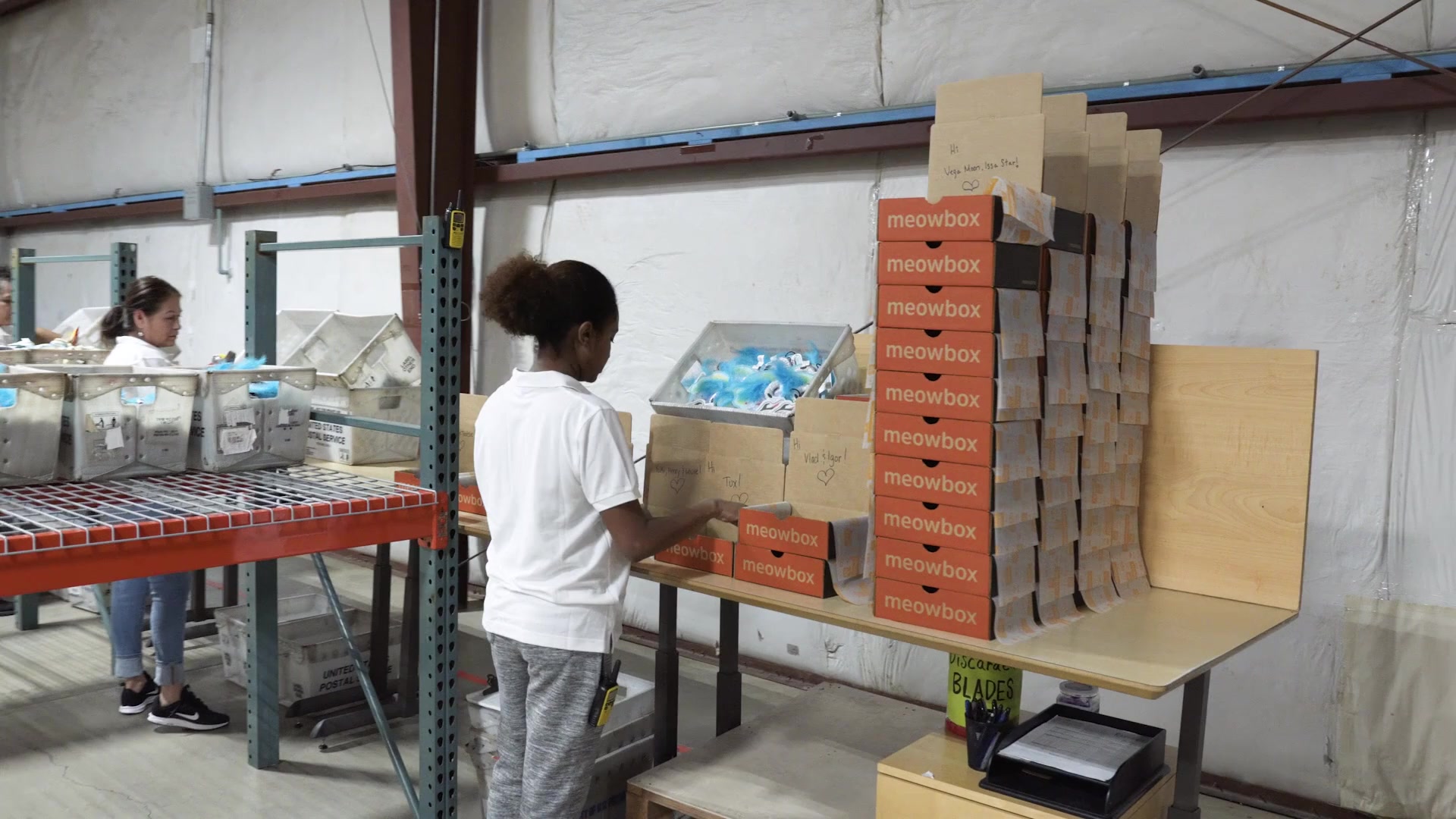
Choosing a third-party logistics (3PL) partner is an important decision for any subscription box business. Unlike traditional ecommerce, where customers place individual orders, subscription businesses often operate on recurring fulfillment cycles. Every month, quarter, or scheduled shipment brings another deadline, another inventory requirement, and another opportunity to deliver a consistent customer experience.
A reliable fulfillment partner needs to understand more than how to pack a box. They need to understand your product requirements, inventory availability, production schedule, and what happens when something doesn't go according to plan.
For subscription businesses built around standardized, repeatable box contents, the right 3PL relationship can make operations easier to manage as order volume grows.
Why Subscription Box Fulfillment Is Different
Traditional ecommerce fulfillment often begins when an individual customer places an order. Subscription box fulfillment may involve hundreds or thousands of orders that need to be prepared within the same shipping window.
That creates a different set of operational challenges.
A subscription business must coordinate incoming products, packaging materials, subscriber counts, assembly instructions, and shipping deadlines before each cycle begins.
For example, imagine a children's activity subscription that ships the same educational kit to every subscriber within a particular age group. Each box requires the same materials, inserts, and packaging configuration.
The challenge isn't creating a completely different package for every customer. It's making sure every box in that production run is assembled consistently and shipped according to plan.
This is why subscription fulfillment requires careful attention to repeatability, inventory readiness, and production planning.
What to Look for in a Subscription 3PL
Consistency Over Speed Alone
Fast shipping is valuable, but speed means little if customers receive incomplete or incorrectly assembled boxes. Ask how a prospective fulfillment partner documents packing instructions and maintains consistency throughout a production run. A clear process should identify which products belong in each box, the required quantities, packaging orientation, inserts, and any approved variations. For standardized subscription programs, written specifications are especially important. They give the fulfillment team a consistent reference rather than relying on memory or informal instructions.
A Dedicated Point of Contact
Communication becomes especially important when your business operates around recurring deadlines. Ask who will manage your account, how updates are communicated, and what happens when inventory arrives late or production requirements change. You should know whom to contact before a problem occurs. A prospective 3PL should be able to explain its communication process, including how exceptions are reported and when decisions require your approval.
Capacity That Matches Your Growth
A fulfillment partner should be able to discuss both your current requirements and realistic future volume. If your business currently ships 500 boxes per cycle, what would happen if that increased to 1,000 or 2,000? Those figures are examples, not capacity claims about any particular provider. Ask how staffing, production space, receiving schedules, and packaging supplies are planned when volume changes. A good fit is not necessarily the largest warehouse. It's a partner whose operating model aligns with your subscription program.
Production Planning Before Assembly Begins
Subscription box fulfillment should not begin with employees opening cartons and figuring out what goes inside. Before production, the business and fulfillment partner should establish the box specifications, expected order quantity, required components, packaging materials, and target shipping window. They should also agree on what happens if a component is missing, damaged, or delayed. Clear planning reduces last-minute decisions and helps prevent an entire production run from being disrupted by an avoidable issue.
Inventory Management Is the Foundation of Reliable Fulfillment
Subscription fulfillment depends on having the right components available at the right time.
A single missing item can delay hundreds of otherwise complete boxes.
Consider a subscription kit containing five products. If four products are available for 1,000 subscribers but the fifth is available for only 800, the business needs a plan before assembly begins.
That might involve delaying the cycle, obtaining additional inventory, or approving a substitution where the subscription program permits one.
A fulfillment partner should not make unapproved product substitutions simply to complete orders.
According to GS1 US's inventory management guidance,
Questions to Ask About Inventory
Before selecting a 3PL, discuss how the provider handles incoming inventory, identifies products, records discrepancies, and communicates shortages.
Also ask how inventory is separated when multiple subscription programs or product versions are stored in the same facility.
A company shipping different kits for different age groups, for example, needs a reliable method for distinguishing components and finished products.
The goal is to prevent confusion before it reaches the packing station.
Standardized vs. Individualized Packouts
Not every subscription box business operates the same way.
Some businesses ship a consistent assortment to every subscriber within a particular program or category. Others assemble highly individualized boxes based on personal preferences, surveys, or constantly changing selections.
These models require different fulfillment processes.
Standardized Subscription Boxes
A standardized program uses a defined packing configuration for a group of orders. Examples might include an identical monthly educational kit, a recurring craft project, or a subscription package containing the same approved products for every recipient in a particular category. This structure supports documented instructions, repeatable assembly, and production planning around known component quantities.
Highly Individualized Subscription Boxes
An individualized program may require a different combination of products for nearly every subscriber. That can introduce additional picking rules, inventory complexity, verification steps, and labor requirements. Neither model is inherently better, but they are operationally different. Creative Fulfillment's preferred customer fit is standardized, repeatable subscription fulfillment. Businesses considering a partnership should explain their packing model early so both parties can determine whether the work aligns with the operation.
Quality Control Should Be Part of the Process
Quality control is not simply checking whether a box looks attractive before it leaves the warehouse.
For subscription fulfillment, it includes confirming that the correct components are present, quantities match the approved instructions, packaging is appropriate, and the completed order is ready for shipment.
Ask a prospective 3PL how it verifies packing accuracy and what happens when an error is discovered.
For a standardized subscription program, an approved sample box or documented packing specification can provide a useful reference.
It is also worth asking how the provider handles changes between subscription cycles. If a product is replaced in the next month's box, the previous instructions should not accidentally carry over.
Understand the Full Cost of Fulfillment
When comparing 3PL providers, avoid making a decision based only on a quoted price per box.
Different providers may structure their fees differently, and a low initial estimate may not include every activity your subscription program requires.
Ask for a written explanation of applicable receiving, storage, assembly, packaging, shipping, and additional handling charges.
Also clarify how changes to box contents, order volume, or production deadlines affect pricing.
For example, a subscription business that regularly changes its packing specifications may have different labor requirements from one that assembles the same kit repeatedly.
Understanding these differences helps you compare proposals fairly.
Plan Around Subscription Deadlines
Recurring shipments create recurring deadlines, but those deadlines depend on several moving parts.
The subscription business needs to know when final subscriber counts are available, when inventory will arrive, when assembly can begin, and when completed orders must be handed to the shipping carrier.
Ask your prospective fulfillment partner what information it needs before scheduling a production run.
You should also establish realistic cutoff dates for changes.
A last-minute increase in subscribers may be manageable when sufficient components and production capacity are available. The same increase could create problems if inventory has already been allocated.
According to subscription order fulfillment documentation,For businesses using Shopify, its subscription order fulfillment documentation explains why inventory availability and fulfillment dates need careful coordination. These principles are relevant even when a subscription business uses a different ecommerce platform.
How to Prepare for Your First Fulfillment Cycle
Before transferring subscription fulfillment to a new partner, organize the information needed to evaluate and prepare the program.
Start with a clear description of the subscription model: what is shipped, how often shipments occur, and whether every subscriber receives the same contents.
Then document the components, expected quantities, packaging requirements, and typical shipping volume.
Identify the source of each product and its expected arrival schedule.
It is also helpful to prepare an example of the finished box and explain which details are essential to the customer experience.
Finally, discuss the transition timeline. A new fulfillment relationship may require time to review specifications, receive inventory, establish procedures, and confirm that the program is ready.
The exact onboarding process should be agreed upon with the provider rather than assumed.
Questions to Ask Before Choosing a 3PL
When evaluating a potential subscription fulfillment partner, ask questions that reveal how the operation works in practice:
The answers should help you understand not just what a provider offers, but whether its processes match the way your business actually operates.
- 1Do you regularly handle recurring subscription box assembly?
- 2Is our program's standardized packing model a good fit for your operation?
- 3How are packing instructions documented and updated?
- 4What happens if incoming inventory is short or damaged?
- 5How are inventory discrepancies communicated?
- 6What information do you need before each production cycle?
- 7How do you manage increases or decreases in order volume?
- 8What quality-control procedures apply to our type of program?
- 9How are receiving, storage, assembly, and shipping charges calculated?
- 10Who will be our primary contact when questions arise?
Find the Right Fulfillment Partner for Your Subscription Business
Your subscription business depends on delivering a consistent experience with every shipment. Choosing the right fulfillment partner means finding a team that understands your packing requirements, recurring production cycles, and the importance of getting the details right.
Creative Fulfillment, based in Hillsboro, Oregon, focuses on subscription box fulfillment and repeatable kitting and assembly operations. If your business ships standardized subscription boxes and you're considering outsourcing fulfillment, the next step is to discuss your program's specific requirements.
Whether you're preparing to launch a subscription box or looking for a fulfillment partner that better fits your existing operation, a conversation can help determine whether Creative Fulfillment is the right match.
Ready to simplify your kitting or assembly process?
Request a Custom Fulfillment Quote from Creative FulfillmentTell us about your subscription program, expected volume, and packing requirements so we can explore whether we're a good fit.
Frequently Asked Questions
How early should I start looking for a subscription 3PL?
Begin evaluating providers well before the fulfillment date you want to transition. Allow time to discuss requirements, review pricing, document packing specifications, and coordinate inventory delivery. The appropriate lead time depends on the complexity and volume of your program.
What information does a 3PL need to quote my subscription program?
Be prepared to share expected order volume, shipping frequency, product dimensions and weights, number of components per box, packaging requirements, inventory storage needs, and any special assembly instructions.
Is a 3PL a good choice for a small subscription business?
Possibly. The decision depends on order volume, internal labor costs, available space, shipping requirements, and the type of fulfillment work involved. Compare the full cost and operational requirements rather than assuming outsourcing is always cheaper.
Can a subscription 3PL handle changing box contents?
That depends on the provider and the type of changes. A standardized program may use a different approved configuration each month while still maintaining a repeatable assembly process within each production run. Discuss how instructions and inventory requirements are updated between cycles.
Additional Resources
The following independent resources provide background on product identification, inventory planning, and supply-chain operations:
- GS1 US — Inventory Management for Small Businesses
- GS1 US — Barcode Types and Product Identification
- Shopify Help Center — Managing Subscription Order Fulfillment
These resources are for general education and are not endorsements of Creative Fulfillment.